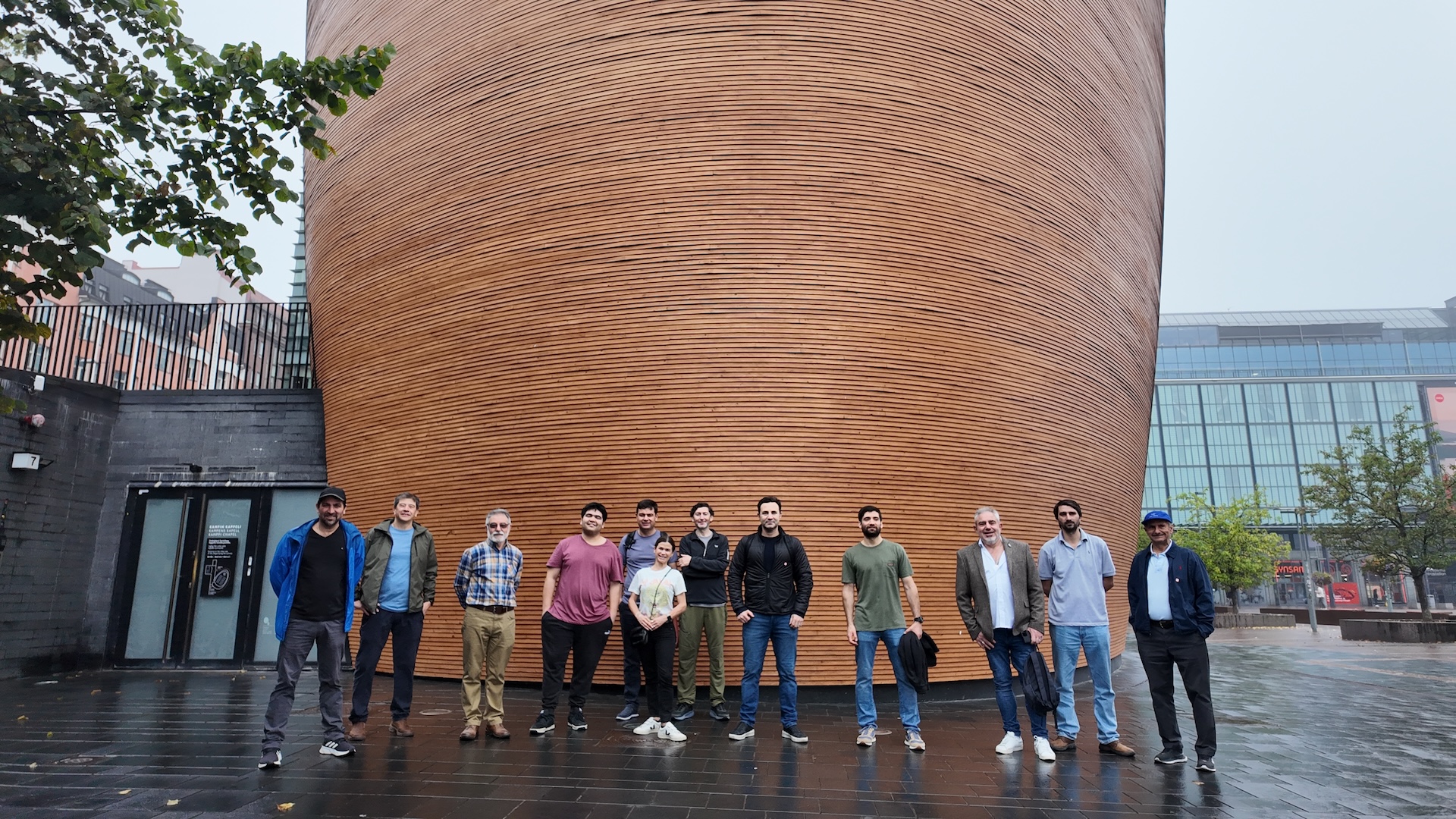
Sawmill Safari 2025: South American delegation visits Finland and Estonia to learn about green energy, efficiency and bioproducts


An important delegation of 27 members from the South American forestry industry visited the main sawmills of Finland and Estonia as part of the Sawmill Safari 2025 visit program.
SEPTEMBER 2025.- In Finland, the timber industry has a rich and long history, which has evolved along with the use of technologies, initially being the basis of growth since its independence (1917). Today, the forestry industry represents 20% of Finnish exports, 20% of industrial volume and 16% of the country's employment.
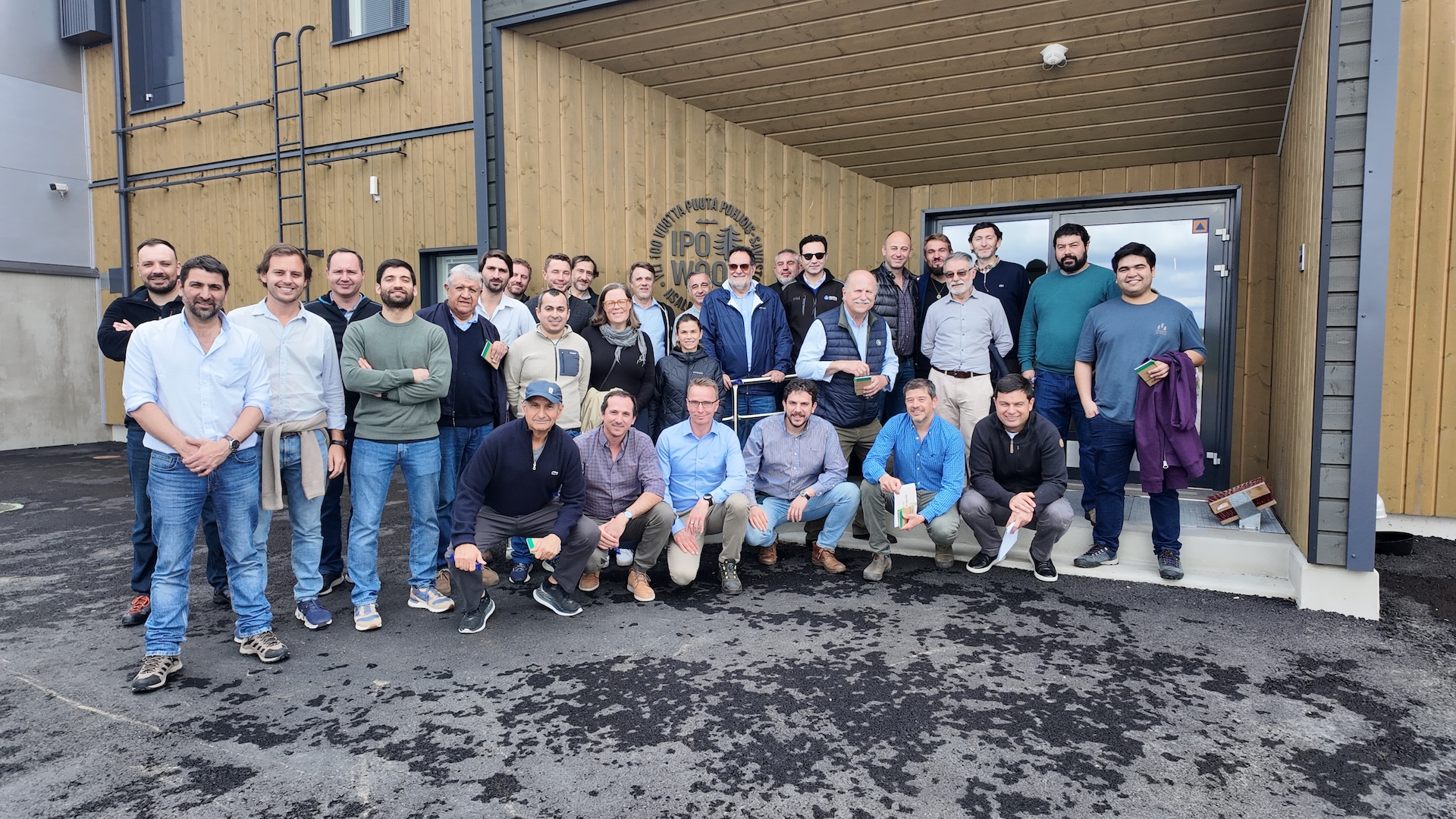
These figures were only the tip of the iceberg of what the South American delegation of forestry industry leaders and representatives from industrial associations, led by Rodrigo O'Ryan (President, CORMA) and Patrick Reydams (ABIMCI/FIEP), were able to see on the ground after visiting the sawmills of Rauma Sawmill Metsä Fibre; IPO Wood -Iisalmen Sahat; the thermal wood plant, Lunawood; and the international fair Puumessut in Jyväskylä.
Both in Finland and Estonia, they were able to immerse themselves in the production process, as well as in how they use all resources both for energy efficiency -energy generation- and for bioproducts, aiding the circular economy chain.
The tour was made up of 27 members of the forestry industry from Uruguay, Chile, Brazil, and Argentina. It was organized by the consultancy Niina Fu, specializing in international cooperation in the South American forestry sector. The project was carried out in cooperation with the Finnish company Jartek Invest Oy and the Estonian company AS Hekotek.
Follow us on: 
Niina Fu, creative consultant for Sawmill Safari 2025, explains to Entreprenerd the objectives of this tour. "I want to bring sawmill professionals to Finland so they can see with their own eyes and experience how a sawmill works and how technology is used, instead of just reading articles or listening to sales speeches."
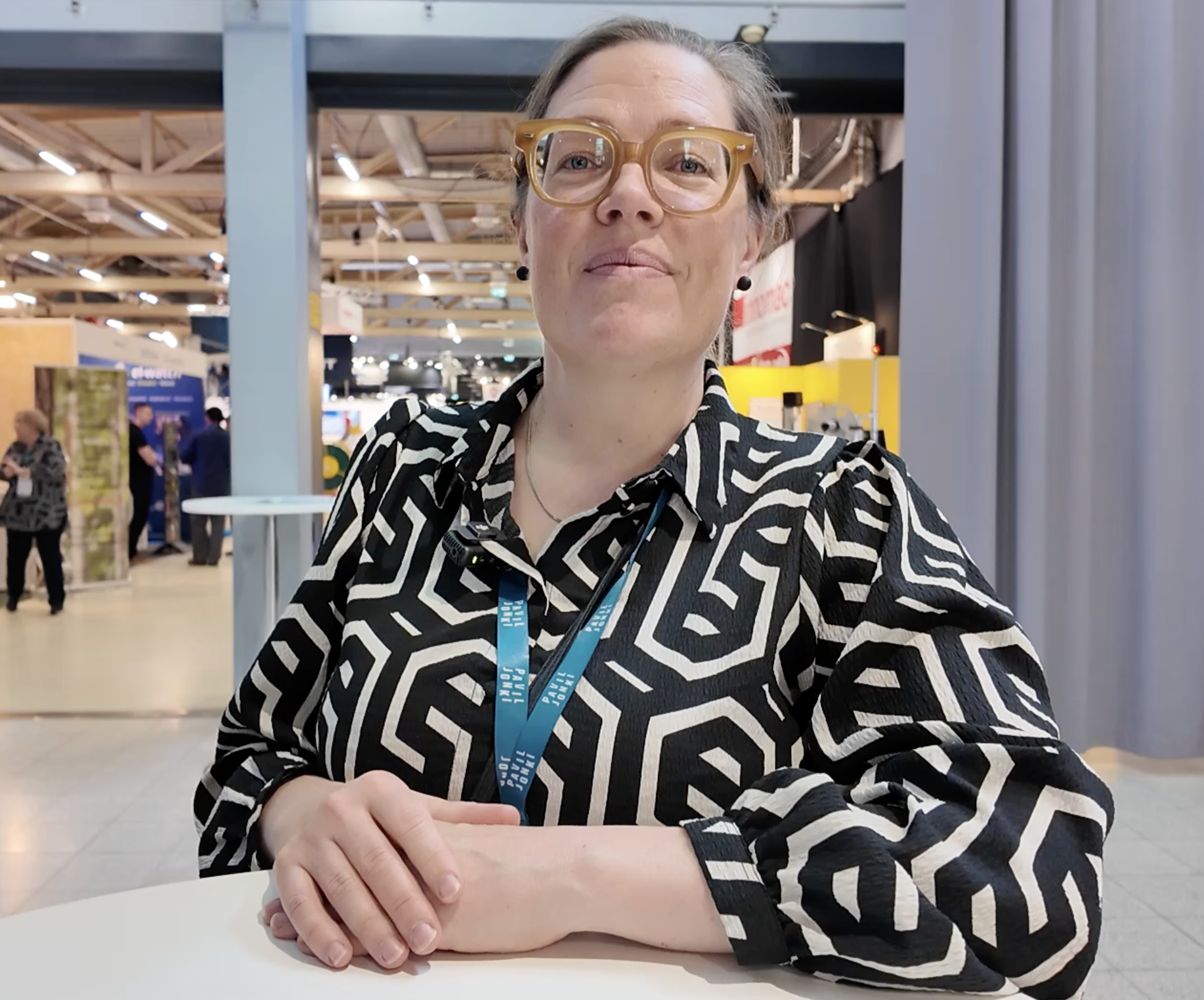
"The idea is to bring the end customers here to see the potential of the new technology. And when they see it with their own eyes, the result is much better. We want to plant the first ideas in their minds: what they can do, what is possible to do, and we hope that in the future there will be a business between Finland and Chile," she adds.
For Rodrigo O'Ryan, president of Corma, this visit was of great significance and provided an understanding of how the wood industry has been a crucial basis for Finland's economy, not only that but also how it contributes to the generation of bioproducts, renewable energy, technology and robotics today, and how it also leads research and use of R&D.
On this subject, he stressed that, "I believe we need to bring not only entrepreneurs, but also people from other guilds, from other worlds, so they can see how the forestry sector can complement their economic and productive activities. At the same time, I believe it's important that authorities from different countries come and see how the first world fundamentally relies on this great sector that is the forestry industry and the bioeconomy."
ENERGY AND PRODUCTIVE EFFICIENCY: METSÄ FIBRE - RAUMA
Rauma Sawmill - Metsä Fibre, is one of the most modern sawmills in the world, built from 2020 with one of the largest investments of the time, it began its productive functions in 2022.
The modern sawmill in Rauma was the first stop for the delegation, where they were able to appreciate the highly automated and robotic process across all its production lines, use of AI and highly qualified staff; one of its most notable attributes being the creation of its own software for plant operations, highlighting the internal technological development of Metsä Group.
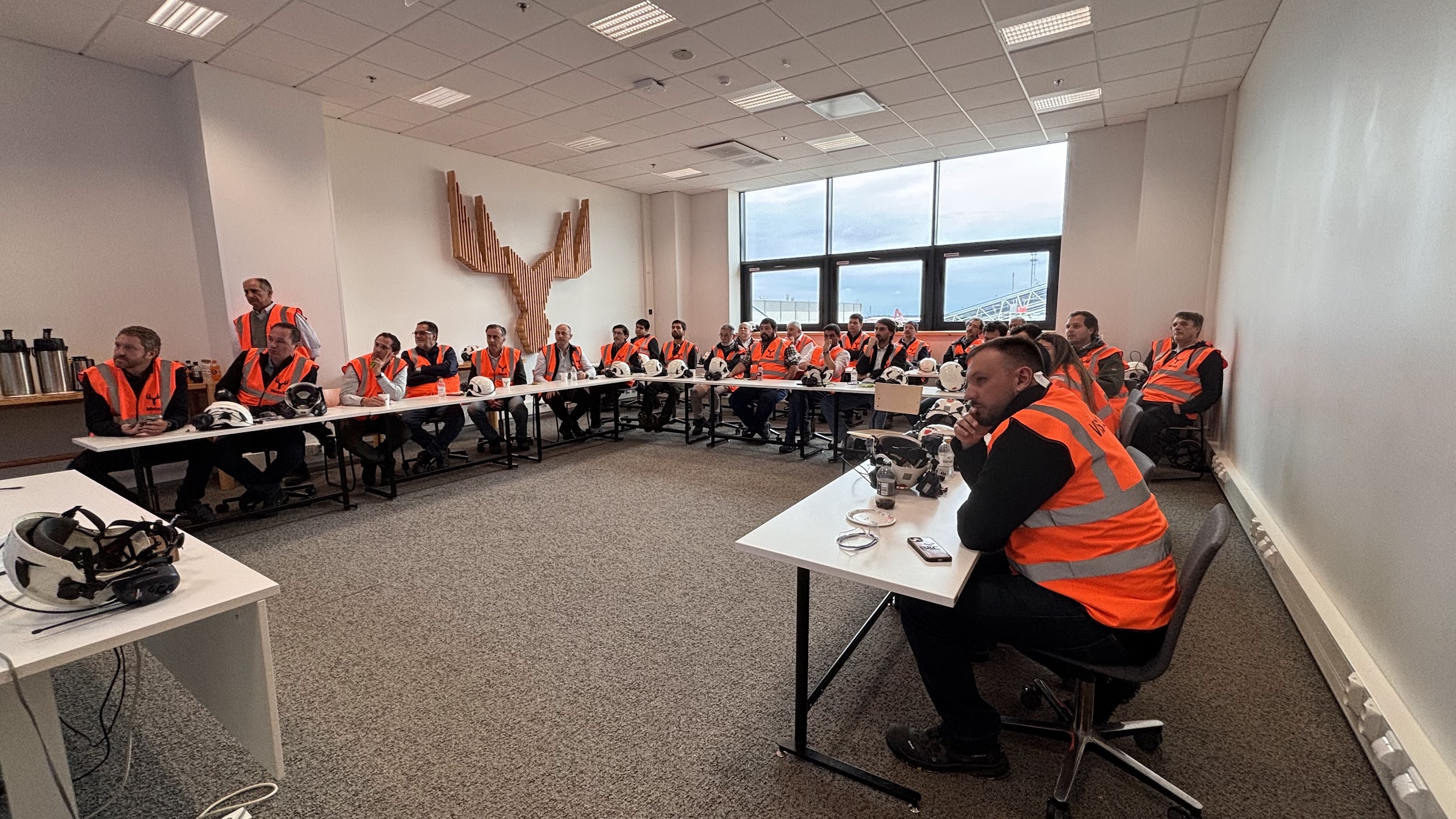
Felipe Pezoa Andaur, representative of San Ignacio Industrial Timber Sawmill and member of the Chilean delegation, highlighted the technology used in the Rauma plant. "The most notable thing is the technology they have (...) learning from this is indeed a good way to take the path to reach these technologies and be able to implement them in Chile".
Another relevant point is the sustainable approach and its relationship with the care for the environment, its surroundings and the community. During the presentation given by Metsä, they emphasized how the voice of the citizens is heard and decisions are made to foster a good relationship with the neighbors, also highlighting that for every new job in the sawmill, 3 more jobs are generated in the community.
It should be noted that all waste from the plant is used for energy, both for the plant itself and for the city, making it a significant player in energy production. The plant has an approximate annual production of 750,000 cubic meters of pine sawn timber.
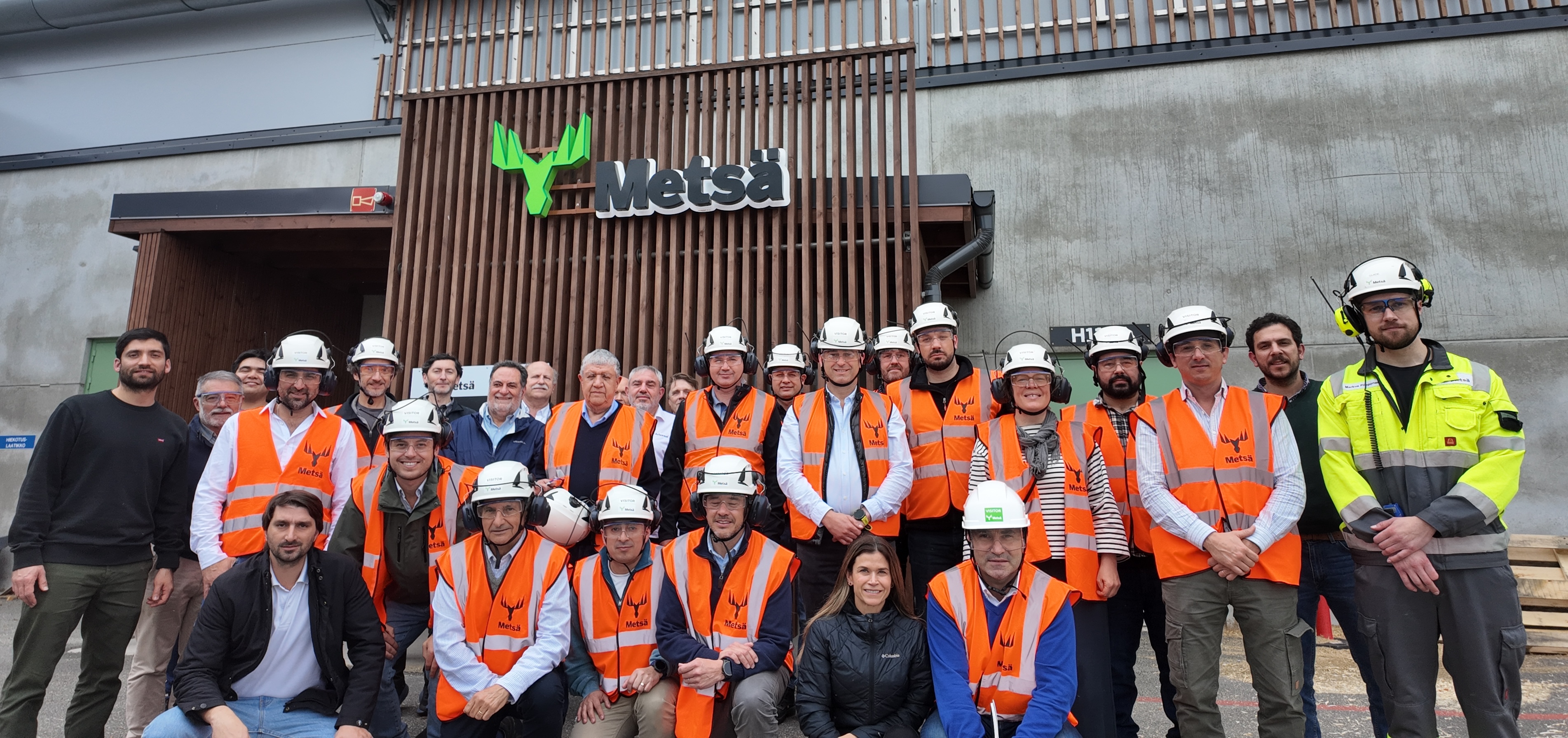
ÄÄNEKOSKI: THE CENTER OF FINLAND'S BIOINDUSTRY
After witnessing the automated operation of the Metsä plant, the delegation moved to the city of Äänekoski, known as the center of Finland's Bioindustry, where they were met by Sari Åkerlund, Director of Economic Development for the City of Äänekoski. She presented the city's industrial strengths and her vision for the future, highlighting how this small city of 18,000 inhabitants has made a place for itself in the bioindustry world, generating elements ranging from textile products like Kuura, to the use of aniline to make concrete; and featuring 3D Fibre, the new bioproduct for packaging that is in development in Äänekoski (a joint effort of Metsä Spring and Valmet).
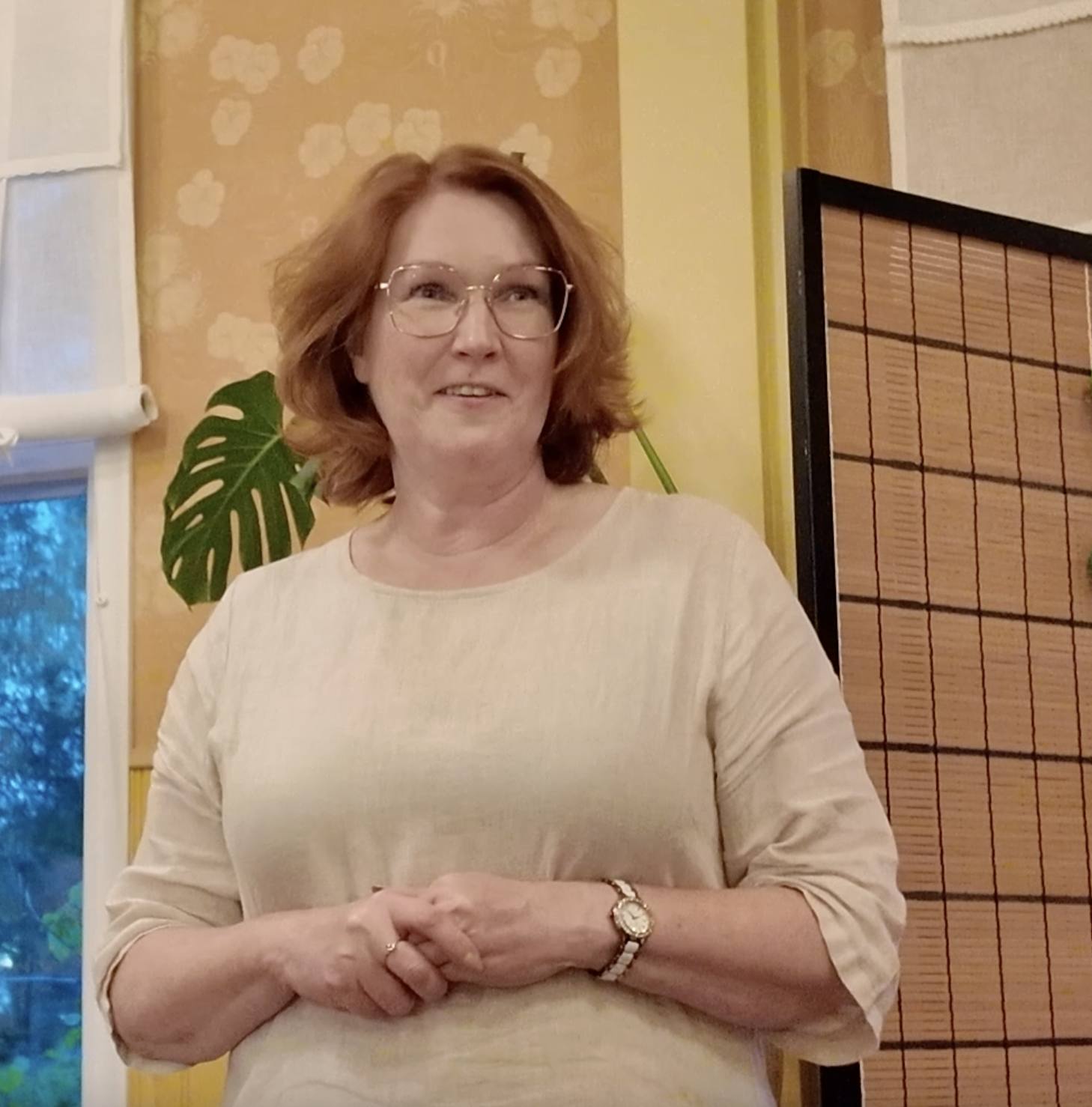
"Äänekoski is a renowned industrial city where new business opportunities with bioproducts originating from the forestry industry are created. The industrial area of Äänekoski was established in 1896, and the town -historic center- is roughly the same age as the industrial zone," emphasized Sari Åkerlund.
Åkerlund explained that the city has 1300 businesses, most of which are small businesses, and among the largest are Metsä, Valio, Valtra, Valmet. By the end of 2026, the new Metsä Wood Kerto LVL rolling mill is expected to be operational, a product that significantly reduces the carbon footprint of buildings compared to many other materials. The investment amounts to €300 million.
IPO WOOD: WOODEN TRADITION AND COLLABORATIVE WORK
One of the main objectives of the Sawmill Safari 2025 was to showcase how Finnish sawmills operate, the technology they use to make production more efficient, always being conscious of the care of forests, land, and the environment.
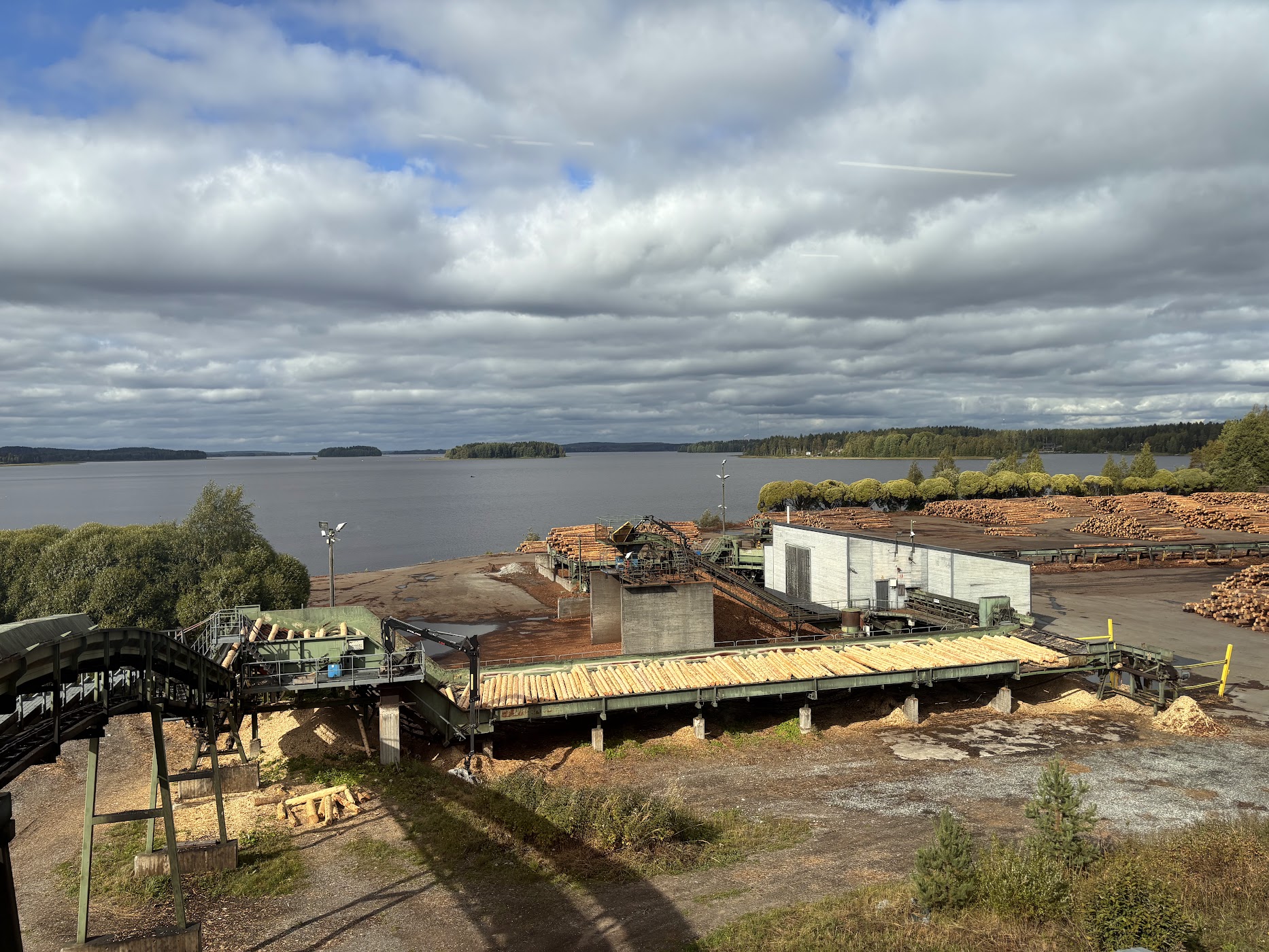
At the sawmill of IPO Wood -Iisalmen Sahat- they were able to more directly appreciate the work lines, both of pine and spruce. The company has a long tradition in the area, as it was born in 1922 and for more than 100 uninterrupted years it has focused on forest management, working with their collaborators with whom they have long-term contracts, technology and operational efficiency.
The attendees were able to immerse themselves in the daily work at the plant, from when the wood arrives until it is packaged. Unlike at Rauma Sawmill, the human factor in the daily chain is still much greater.
Rodrigo O'Ryan, president of Corma, emphasized that, we have seen how businessmen not only take care of their business but also know that all their surroundings, their suppliers, are a fundamental part of the activity in order to develop it efficiently, sustainably, and in the long term.
Meanwhile, for Felipe Echeverria Diez, Chilean representative of Soc. de Inv. Luenza, he highlighted the use of green energy as a topic to exploit in Chile. "What has caught my attention the most is that all the sawmills and producers are moving toward the use of green energy, focusing on how to use it and how to maximize productions while reducing their carbon footprint and its derivatives".
THERMALLY TREATED WOOD WITHOUT CHEMICALS: LUNAWOOD
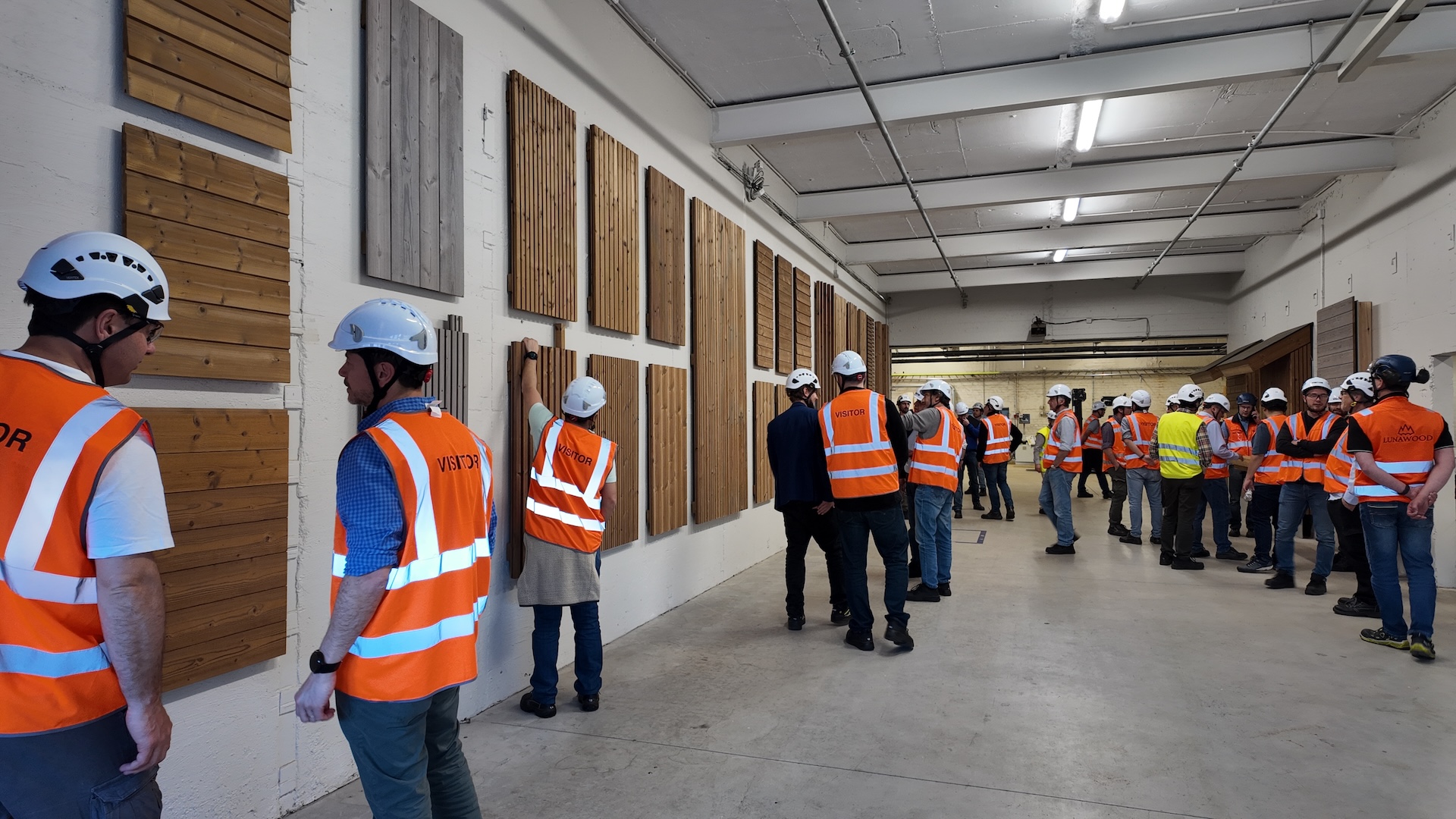
The next stop for the South American delegation was at the Lunawood thermal wood plant, which exports 90% of its production to Europe, the United States, and South America.
Sustainability is one of the most important values for Lunawood as it is something that the customers themselves request, leading it to be a leader in chemical-free thermally treated wood, under a patented production process called Thermowood®, where the wood is treated only with steam and heat.
The largest investment made in 2022/2023 of €5 million was for energy production and lowering CO2 levels; and they hope in the near future to switch from propane to biogas use, as it is more efficient and the steam can be used to heat homes near the plant.
During the tour, they were able to see first-hand the thermal process that pine and spruce wood undergo, the raw material they use for their products.
WOOD 2025 PUU - Jyväskylä
The South American delegation had a significant presence at the Puumessut 2025 (Wood Fair), the largest wood fair held in Jyväskylä, with the Consul of Chile in Finland, Catalina Calderón, being in charge of opening the Latin American Session, where Rodrigo O'Ryan, Director of CORMA (Chilean Forest Association) and Patrick Reydams (ABIMCI/FIEP) demonstrated what is being done in Chile and Brazil regarding the wood industry.
On this subject, Calderón highlighted the importance and history of the Wood Fair, This Fair has already existed for 30 years, and it is a space of great wealth for the Chilean delegation that was able to come because it allows for networking, it allows establishing connections with Finnish companies but also with companies from the rest of Europe and also with Latin American companies.
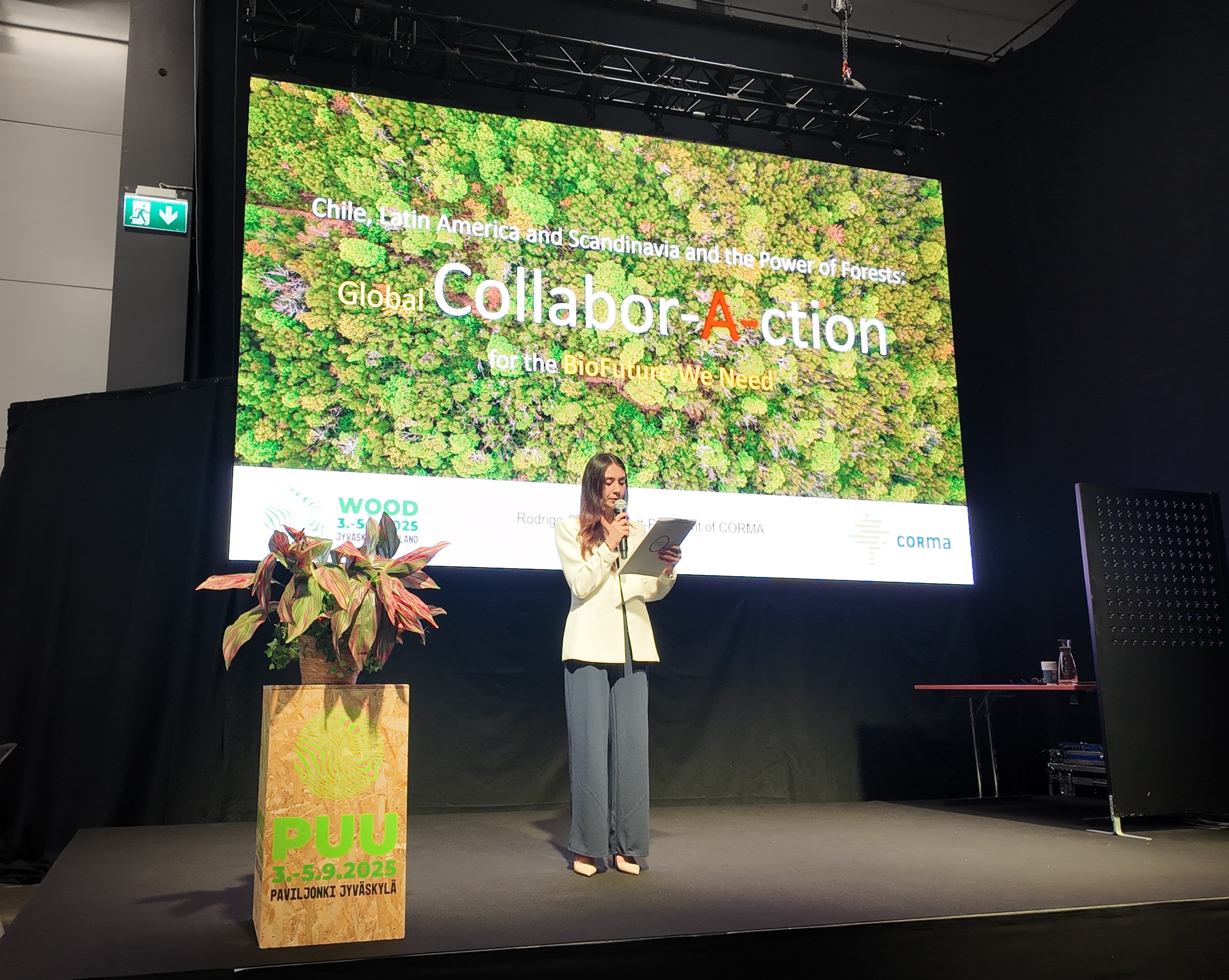
The Consul added that, "we also believe that this space allows for the transfer of knowledge, which is very important as Chile has a significant forestry industry, and we believe that Latin America plays a very important role, not only commercially, but also in sustainability. Therefore, we hope that this event will be of great wealth and benefit to all attendees."
For Carlos Rolfo - in charge of PLCs and electronics at URUFOR (Uruguay) - the fair was a display of the technological advancements that companies are offering today in relation to the wood industry. "At the fair, many technological advancements were seen, many advancements in the sciences, very unique, very centered on AI. These are the steps we will have to follow in Latin America".
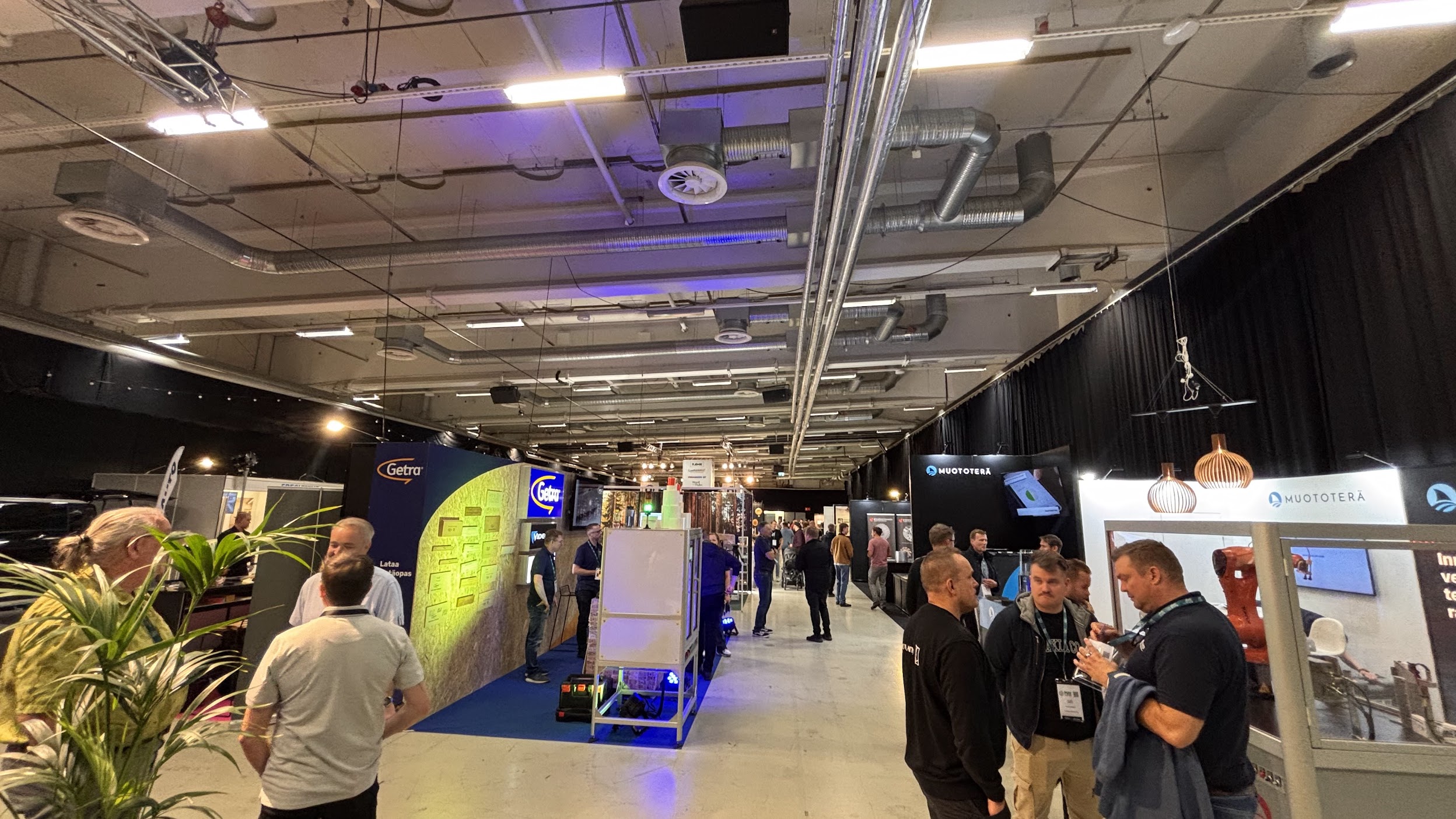
Santiago Dogliotti, Drymill & Biomass Manager of Arboreal -Uruguay- expressed that, "The technology used by the Nordic countries is noteworthy, I think I am leaving with great satisfaction knowing that we are on the same path, that we are using Finnish and Estonian technology. I still have this feeling that they continue to lead in cutting-edge technology in our timber industry".
While a group from the delegation visited various stands at the Wood Fair, another group conducted a field visit to see a forestry machinery demonstration organized by Ponsse, one of the largest companies specializing in forestry machinery.
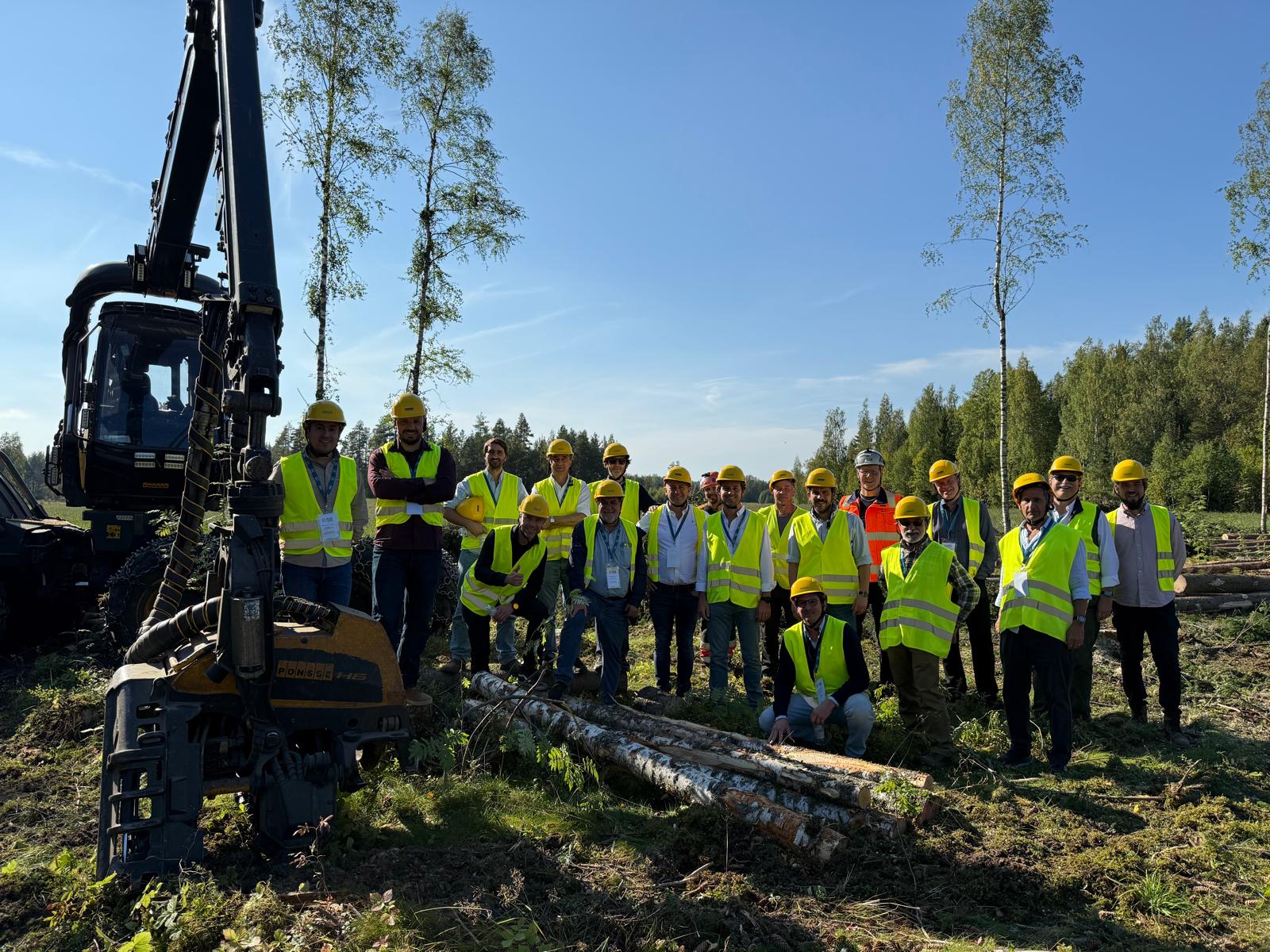
Rodrigo O'Ryan - president of Corma - highlighted that, "here in Jyväskylä (Finland), this tremendous tour in Estonia and Finland is coming to an end, where we visited different types of plants, learning about the various technologies, techniques, scales of the forestry chain, and seeing how this sector is 100% immersed in the culture, the economic sector, and bio-economy of Finland".
At the closing of the Niina Fu fair, she highlighted that, "I think the most important thing during the visit was seeing the machines in operation: the sawmill really operating and the possible technological solutions. That is the most important thing: seeing them in operation. But also, within the group, the conversations between people. We have people from Brazil, Uruguay, Argentina, and Chile; many face similar challenges in their businesses and all want to grow, so they can also discuss these issues and the future of the sawmill industry in Latin America. It's a good platform for exchanging ideas."
The 6-day tour of Estonia and Finland ended with a guided tour of Helsinki, specifically to the wooden structures such as the Oodi library and the church of silence.